Parenting Towards Self-Discipline
Play Your Way to Self-Control

The deepest delights in life are at the end of roads that are walked with discipline.
Great conversation requires learning to listen. The satisfaction of finishing requires focus. The pleasure of real friendship means think about someone other than yourself. The thrill of mastery requires the long, unglamorous work of practice.
These are adult realities. But they don’t suddenly appear at age eighteen. They grow from seeds planted early. From habits built when the stakes were low and the lessons were small.
Which means one of the most important things you can do for your child is teach them that self-control is worth it. That discipline pays off. That learning to sit still, to focus, to wait, to master yourself, is worth it.
We default to negative reinforcement.
Negative consequences are real. The child who can’t control their impulses becomes the teen without friends. The teen who can’t focus does become the adult who can’t finish.
So we give them a relatively painless version of that reality now, the time-out, a spanking, the lost privilege. A consequence early, so they’ll avoid the high-pain version later.
That’s parenting. And it works.
But it’s only half the picture.
If all your child ever learns is what discipline costs, what they lose when they fail, they’ll develop a relationship with self-control built on fear. Only avoiding what you don’t want lands you in places you never imagined. They’ll be disciplined to avoid pain, not to pursue joy.
That’s a fragile foundation. When the external consequences disappear, the moment you’re not there to enforce them, Kurtz’ Heart of Darkness pops it head like a mole at the fair, and you won’t always be there to whack it.
What if they also learned what discipline gives? What if, early and often, they experienced the joy at the end of the disciplined road concretely and delightfully?
That’s what training games are for.
My wife and I made miniature humans that were extraordinarily energetic. High energy, mouthy, wiggly, and feral before they were out of diapers. One used to cover her eyes and run full speed until she either tripped or smashed into something. She would cry at the pain, pull it together, and do it again. Another was infamous for taking off all of his clothes as soon as we turned our back. Even in public. We still laugh at an infamous 3-year-old mooning incident. I had an 11-year-old go to school without shoes and not even realize it until someone pointed it out. Needless to say, sitting still does not come naturally to any of us.
But sitting, concentrating, controlling yourself is required for many of the greatest joys involved in being human. It’s what you need to listen to a teacher, to make it through church, to be present in a conversation, to read the greatest poems, to enjoy the greatest symphonies, to watch the greatest movies, and to learn anything difficult.
Water doesn’t flow uphill on it’s own.
So my wife and I came up with the Sit-Still Game.
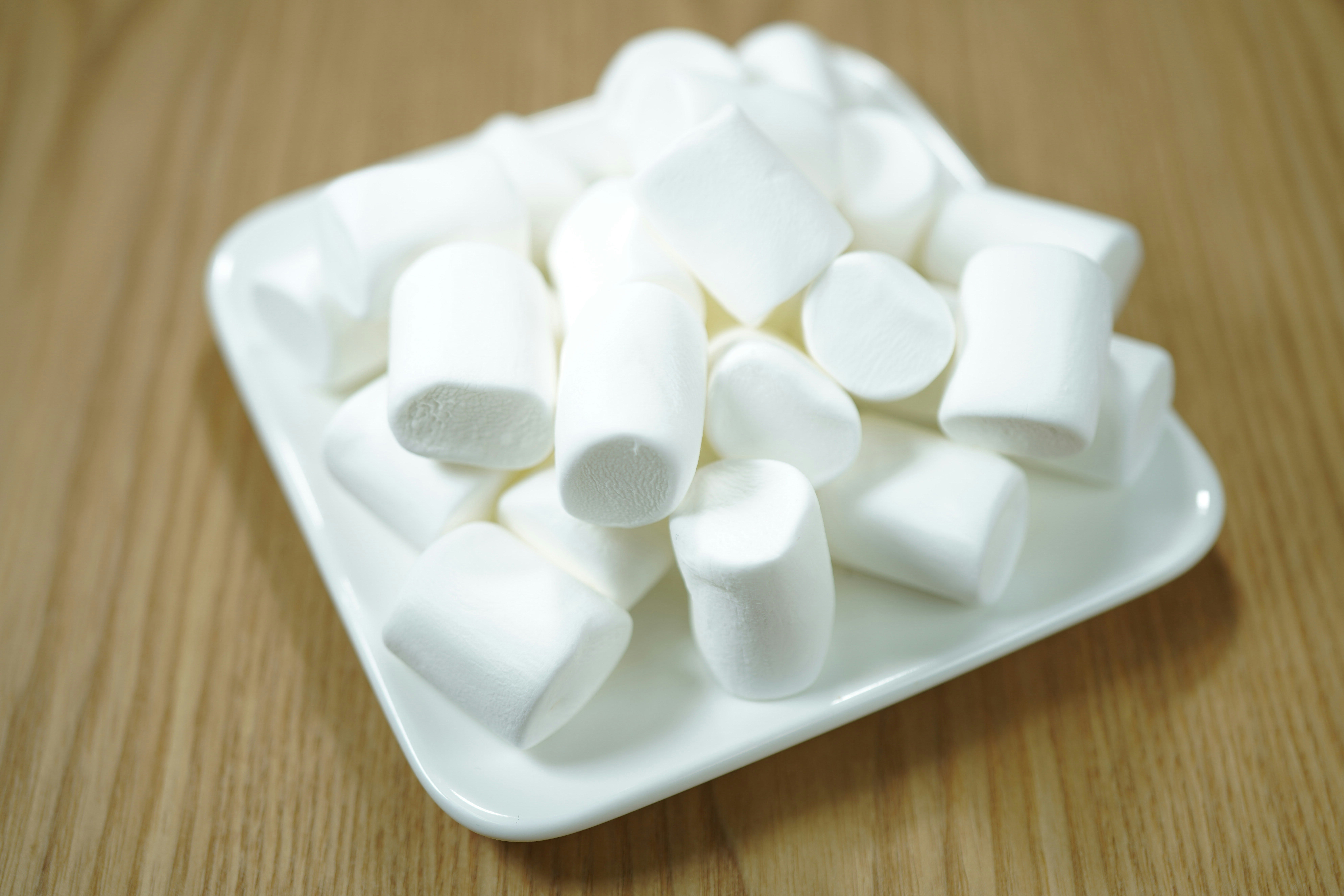
We sat the kids on the stools at the kitchen counter and set a timer. Then I would balance tiny marshmallows and chocolate chips on their arms. On their legs. On their shoulders. On their heads.
The game was simple: whatever was still balanced when the timer went off, they got to eat. Whatever fell off, I got to eat.
Kids who could not sit still for thirty seconds suddenly had superhuman stillness. Kids who squirmed through every meal became statues. Kids who could barely focus long enough to put their shoes on found deep as-yet untapped wells of self-control.
We’d run the timer and watch them hold their breath, barely moving, eyes locked on the marshmallows balanced on their forearms. My wife would tell jokes and they would try to not laugh. We’d watch them learn what it felt like to be in control of their body. We’d watch the concentration on their faces in real concentration. Chosen concentration. The kind you can’t manufacture with threats.
Avoiding annoying your parents is a terrible motivation to internalize.
We spend time on the costs of undiscipline, the consequences, the corrections, the punishments. We forget to show our kids what self-control feels like when it works. We forget to let them taste the rewards of self-control.
We wanted our wild brood to believe that the disciplined road leads somewhere good. Focusing your attention and controlling your body isn’t just something adults impose on you. It’s something that pays off. Real delight waits at the end of that hard road.
Not just ‘discipline is the price you pay to avoid punishment.’ But ‘discipline is the road that leads to the deepest joys.’
Let them feel the delight of discipline working. Start small. But do it consistently. The fruit is worth the effort.
The disciplined road is long. Give your kids a shortened version of it now, low stakes, high fun, real reward, so that when the real road stretches out in front of them, they already know something about where it leads.