
Rescued from Lunacy
Why the Governance of the Cosmos Matters

(This is the Introduction to my forthcoming book, Christ The Astral King: Jesus’ Ascension to the Fourth-Day Thrones)
It is true that nobody makes a new earth without first making a new heaven. G. K. Chesterton
In the Gospel of Matthew, Jesus heals lunatics.
“And his fame went throughout all Syria: and they brought unto him…those which were lunatick…and he healed them” (Matthew 4:24).
“Lord, have mercy on my son: for he is lunatick, and sore vexed: for ofttimes he falleth into the fire, and oft into the water” (Matthew 17:15).
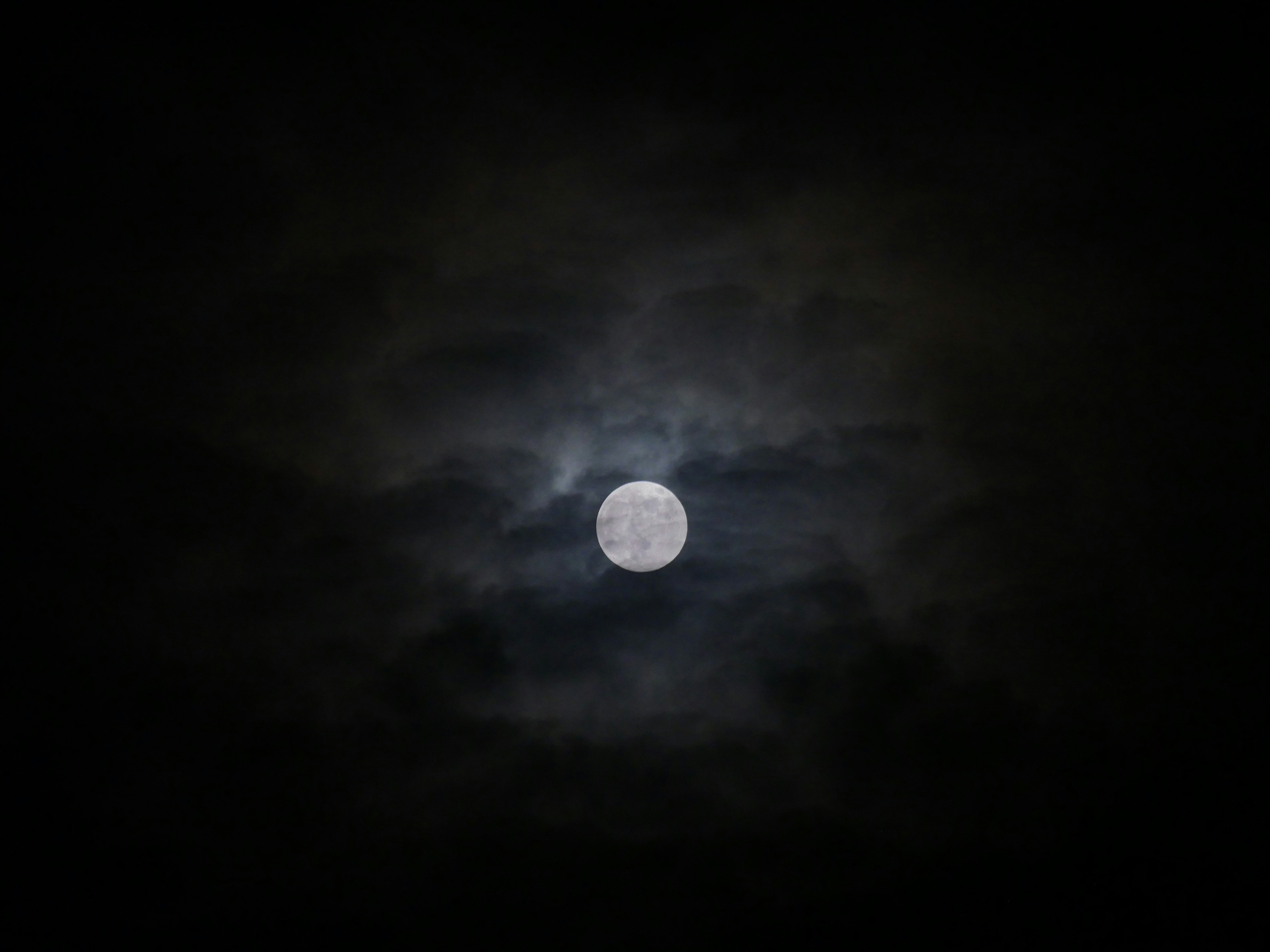
A lunatic is someone struck by the moon. Modern translations reduce it to seizures, stripping away the cosmic implications. But Matthew describes the man as σεληνιαζόμενος, moonstruck, trapped in cycles of moon-madness.
Jesus doesn’t deny the man’s diagnosis. He heals him. In fact, the diagnosis reveals the depth of the healing.
A lunatic is at war with the moon. The man Jesus heals is unstable, violent, self-destructive, enslaved to vicious ruling rhythms. He throws himself into fire and into water. At regular intervals he attacks himself.
Jesus rescues people from their bent and broken war with the moon; from their cosmic dislodgment. His death, resurrection, and ascension, He changes the entire world’s relationship to the moon (and to the sun, the stars).
Scripture assumes that life is shaped by the governance of the cosmos. Rhythm, authority, and order aren’t abstractions that we choose to acknowledge or not. They’re real. The well-ruled flourish. To be ruled poorly, whether ruled by the wrong things, or by resisting rightful rule, is to descend into chaos. Lunacy isn’t simple madness. It’s life under disordered rule.
Healing lunatics is not a peripheral miracle. It’s a sign. It’s a declaration that Jesus is reordering the government of the cosmos.
From the opening chapters of Genesis, Scripture presents creation as ordered and governed through offices. God makes the world, then sets up thrones and installs rulers. The sun, moon, and stars are neither decorations nor inert mechanisms. They’re placed in the firmament to rule. To give light, govern time, mark seasons, and exercise authority over the rhythms of life on earth. The cosmos is a structured hierarchy of service, with created cosmic lights sitting in mediating thrones, ordering God’s work in the world.
Adolf Hitler - during the ‘thousand years’ of his World Domination - set off his own epoch by stating: ‘the solar constellation of Christianity had ended.’ - Eugene Rosenstock-Heussy The Fruit of Lips p. xvii
Adam and Eve are placed in the garden, under the authority of the sun, moon, and stars. The heavenly lights are mankind’s tutors, training them up in their garden-thrones. Man was to learn to rule the garden, the land, and the whole world by watching God’s ordered heavens. Authority is real, and it is formative.
The fall fractures our relationship with the hierarchy of reality. Authority is distorted into rivalry. Rhythms are infected with death and become the grinding teeth of Chronos. The seasons become cycles of futility. Power de-converts to coercion. What was meant to feed life devours it. The world was struck with lunacy, not because the moon is evil, but because the moon is good, and we resisted her throne.
Modernity, for all its technological sophistication, hasn’t escaped this problem. If anything, it’s intensified it. We deny the reality of cosmic offices and reduce the world to matter governed by impersonal forces. We haven’t liberated our humanity. We’ve normalized lunacy. Forgotten authority doesn’t disappear. When symbols are stripped of their formative and participational power, they’re replaced by forces that shape us against our consent.
The result isn’t freedom. It’s confusion. Autonomy is unstable. What we called enlightenment turned out to be lunacy. But, as one of your own prophets has said, a rose by any other name is still a rose.
AD and BC cannot be understood by the academic professionals. - Eugene Rosenstock-Heussy The Fruit of Lips p. xxi
The lunatic’s healing is a window into the work of Christ as cosmic King.
Jesus doesn’t dismantle the offices God established on the fourth day of creation. He assumes them. He fulfills them. He redeems them. In His death, resurrection, and ascension, Christ takes the heavenly thrones and assumes their throne-rights: light, time, seasons, and authority. He occupys the office as the true king the thrones were always waiting for.
This isn’t mythology replaced by theology. It’s creation receiving its Creator as its Cosmic King.
Under Christ’s reign, time is no longer a grinding prison. Seasons are no longer cycles of the fruitless fight with thorns and thistles. Authority is no longer rivalry. History receives back its story because it is returned to its Author. It is narratable, ordered toward judgment, resurrection, and glory. The story of the world isn’t a biography. It’s a bio-dia-thanos-ography, a life-through-death-story. And it’s the King’s story.
The world isn’t rescued from the prison of time, but from madness, futility, from the false and lying lordship of Death and Satan, that old dragon that was in the garden in the beginning. Time itself is rescued, in the ascension of Jesus.
The Church, united to Christ and seated with Him in the heavenly places, now lives within this restored order. She inhabits time so that it becomes high time, opportune time. She remembers anew. She hopes afresh. And, by faith, her love of enemy and friend brings the resurrection at the end of history into the present, returning the world to the rhythms of the second Adam’s spreading fruitfulness.
In a world still learning how to live under the Sun of Righteousness, her life bears witness to the sanity of Christ’s reign.
Thank you Jason. The teaching you’re doing in these articles is stretching me, maturing me. Its voice is pastoral and rich in its beauty. I’m praying for our Father’s blessing on you and yours.
The LLM style unfortunately distracts from this article's coolio substance.