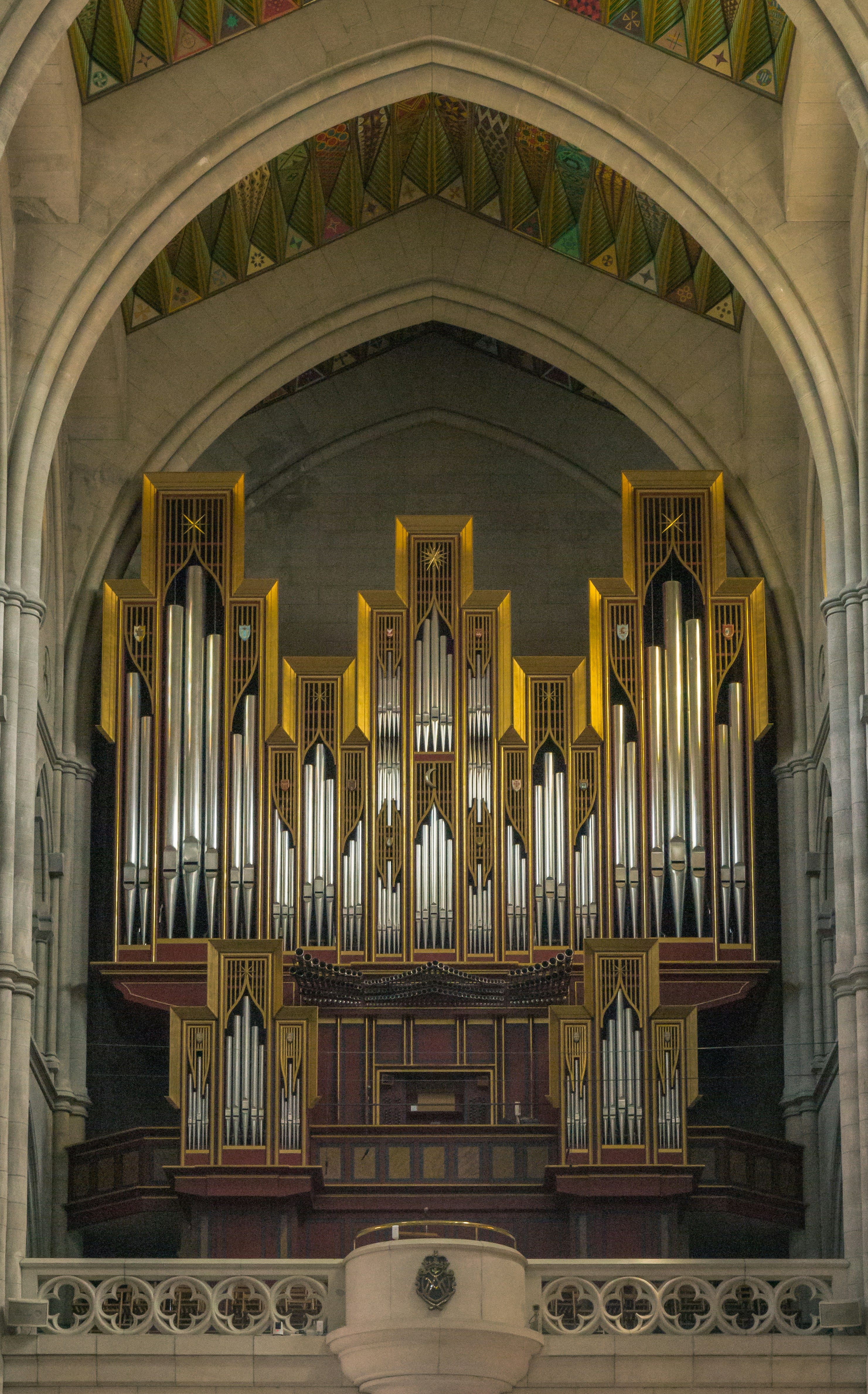
Two Musical Civilizations
Excerpt from my Notes on the Quadrivium

(I’m studying Medieval Math for an upcoming teacher training, here are some of my notes)
During the Middle Ages, two great intellectual worlds inherited the musical science of the ancient Greeks.
Both studied the same math. Both read the works of Greek theorists on music as a system of ratios. Both preserved and expanded their musical mathematics.
But their musical developed in very different directions.
Among the scholars who preserved and expanded the Greek science of music, few were more important than the philosopher Al-Farabi. His Great Book of Music offered one of the most sophisticated mathematical analyses of sound produced in the medieval world.
The music across the Islamic world, however, remained primarily melodic and heterophonic, The richness of the music came, not from harmony, but from subtle ornamentation, microtonal inflections, and the expressive movement through modal systems known as maqāmāt.
Harmony (multiple independent voices forming structured chords) never came to the fore in their tradition.
In Latin Christendom, the same theoretical inheritance produced a different musical future.
Medieval European musicians began experimenting with the addition of a second voice to the chant of the church. At first the voices moved together at fixed octaves or fifths. Over time their experiments grew more elaborate, producing the early forms of polyphony and eventually the rich harmonic structures that would define Western music for centuries.
One cultivated the expressive depth of melody.
The other built architectures of harmony.
In the ancient and medieval vision of the quadrivium, music was never merely a performance art. It was the study of number in time, a revelation of the hidden order of creation. The ratios that governed consonant intervals (two to one, three to two, four to three) were not just facts about sound. They were signs of a deeper harmony structuring the cosmos itself. When musicians tuned their voices to these proportions, they were participating in the mathematics of the created order.
Yet the history of medieval music reveals how the same inheritance could be invested differently. In the Islamic intellectual world, the mathematical science of music was preserved and refined, while musical practice remained centered on melody and mode. In Latin Christendom, those same numerical relationships were not only contemplated, but also constructed. Voices were layered, intervals stabilized, and harmony itself became an architectural principle of composition.
The Islamic intellectual world preserved and refined it mathematically. The Latin Christians turned the same theory into a new musics
The mathematics was shared. The inheritance was the same. But the aim shifts when sung to the divine Three in One vs. a divinity who is Pure Singularity.
There is undeniable beauty on display in both, but it puts into our ears the commitments to different understandings of the base of reality.